


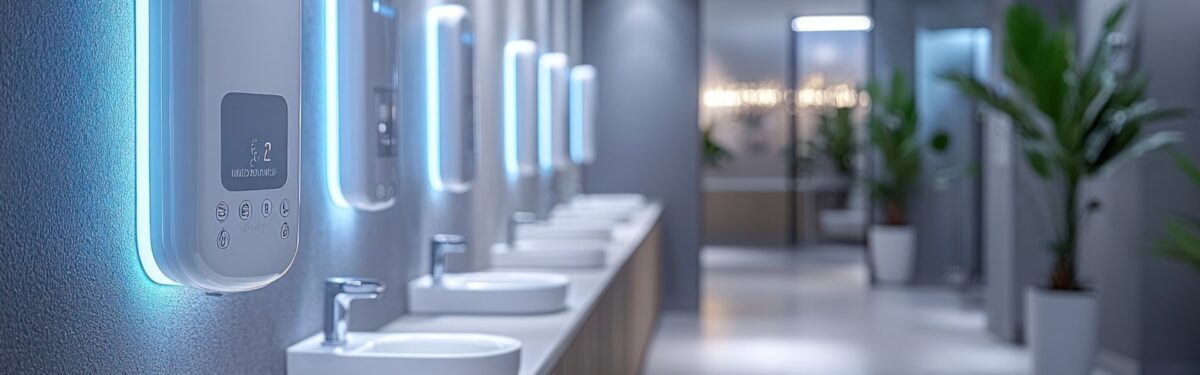

Smart restroom technology helps venues improve cleanliness, reduce waste and manage busy facilities more efficiently. Connected sensors and automated fixtures give staff better insight into restroom conditions without constant manual checks.
For stadiums, convention centers and other large venues, these tools can improve the guest experience while helping teams manage labor and resources.
What Is Smart Restroom Technology?
Smart restroom technology uses connected sensors, automated restroom fixtures and monitoring systems to track conditions in real time. Sensors can monitor foot traffic, supply levels, leaks, air quality and equipment performance. They send real time data to a central dashboard, where staff can view conditions and receive alerts.
For example, a sensor can notify staff when a soap dispenser runs low or a restroom needs cleaning after heavy use. At Miami International Airport, sensors track restroom traffic and alert staff when usage reaches set limits. This helps cleaning teams focus on busy areas.
Benefits of Smart Restroom Technology
Smart restrooms help venues improve daily operations and make better use of staff time. Key benefits include:
- Labor efficiency: Send cleaning crews where they’re needed instead of relying only on fixed schedules
- Supply management: Track soap and paper levels to prevent shortages and reduce waste
- Water conservation: Detect leaks early and reduce unnecessary water use
- Cleanliness: Use traffic alerts to schedule cleaning during busy periods
- Maintenance: Identify problems with restroom fixtures before they cause closures
- Guest satisfaction: Maintain cleaner facilities and reduce service issues
These improvements can support a stronger return on investment (ROI) through lower operating costs and better guest experiences. A Pacific Institute pilot found that leak monitoring reduced water use by 11% and water and wastewater costs by 12% across eight housing properties.
Cleanliness also affects how visitors view a venue. A Bradley Corp. survey found that 85% of people form a negative impression of a facility after using an unclean restroom.
Smart Restrooms for Stadiums and Convention Centers
Large venues often experience sudden changes in restroom traffic. Smart sensors help teams respond to these shifts.
Stadiums and Arenas
Restroom use increases before events, during halftime and after crowds leave. At stadiums and arenas, sensors help staff track busy locations and respond to cleaning needs. Supply alerts can also prevent shortages during major events. These systems support a high performing venue by keeping restrooms ready for guests.
Convention Centers
Restroom traffic at convention centers changes based on event schedules and attendee movement. Traffic data helps managers plan cleaning around keynote sessions, exhibit hours and other busy periods. Past usage trends can also guide staffing for future events.
How to Implement Smart Restroom Technology
A phased rollout helps venues test smart restroom systems before expanding across the property.
1. Identify High-Traffic Restrooms
Start with restrooms that have long lines, frequent complaints or repeated supply shortages. Review cleaning records and ask staff where problems occur most often.
Use these findings to set goals and measure future improvements.
2. Choose the Right Sensors
Match sensors to each restroom’s needs. Supply sensors help prevent empty dispensers, while leak and air quality sensors can address maintenance concerns.
Test the equipment in a few restrooms before expanding.
3. Check Network Coverage
Smart sensors need reliable connections to send updates and alerts. Check WiFi coverage, wired connections and signal strength throughout each restroom.
Include your IT team to review network security and device requirements.
4. Connect Monitoring Systems
Link sensors to a central dashboard. Connect alerts to your facility management system so staff can receive and track assignments.
Make sure every sensor identifies its restroom location.
5. Set Alerts and Train Staff
Decide when alerts should trigger and who will respond. Train cleaning and maintenance teams to manage requests through their devices.
Adjust alert settings during the pilot to avoid unnecessary notifications.
6. Measure Results and Expand
Track cleaning times, supply use, guest complaints and maintenance response rates. Compare the results with your starting measurements. Use the findings to improve workflows before adding more restrooms.
Build a Reliable Network for Smart Restrooms
Smart restroom technology depends on reliable network connections. Sensors need to send data quickly so staff can respond to changing conditions.
The same infrastructure can support other smart venue technology, including connected devices and facility management systems.
A strong network helps venues support today’s tools while preparing for future needs. Spectrum Business Hospitality helps large venues build reliable networks for connected technology. Explore how our solutions can support your venue and request a consultation.